




Helium Leak Detection Services
When system integrity is non-negotiable, helium leak detection sets the standard. Recognized as one of the most sensitive and reliable non-destructive testing methods available, helium leak detection can locate and quantify leaks down to rates as low as 10⁻¹² mbar·L/sec — identifying failure points that no other method can reach.
At Tanqeb, we deliver precision helium leak detection services tailored to your equipment, access constraints, and operational requirements — with minimal disruption to your plant.
Why Helium?
Helium’s physical properties make it uniquely suited for leak detection:
Property | Advantage |
Smallest molecular size | Penetrates microscopic leak paths that larger molecules cannot pass through |
Chemically inert | Non-toxic, non-flammable, and non-reactive — safe in all industrial environments |
Low atmospheric background | Present at only ~5 ppm in air, providing an exceptional signal-to-noise ratio |
Ultra-high sensitivity | Detects sub-micron leak paths beyond the reach of conventional testing methods |
Our Helium Leak Detection Services
Critical Equipment Testing
- Pressure Vessels & Storage Tanks — Weld integrity, seal performance, and containment verification for atmospheric and pressurized vessels
- Heat Exchangers & Condensers — Tube-to-tubesheet joint testing and shell-side integrity verification
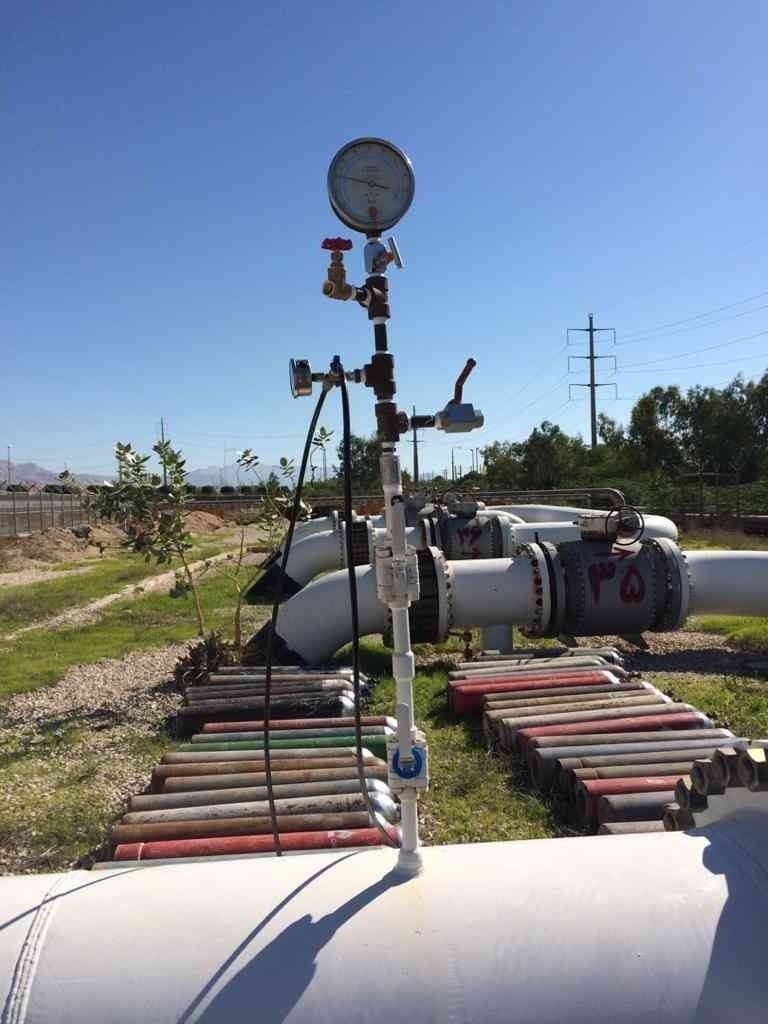
- Piping Systems & Pipelines — Process piping leak detection, including buried and inaccessible lines
- Vacuum Systems — Integrity testing of vacuum furnaces, chambers, and associated components
- Valves, Flanges & Fittings — Localized leak detection at connections, seals, and joints
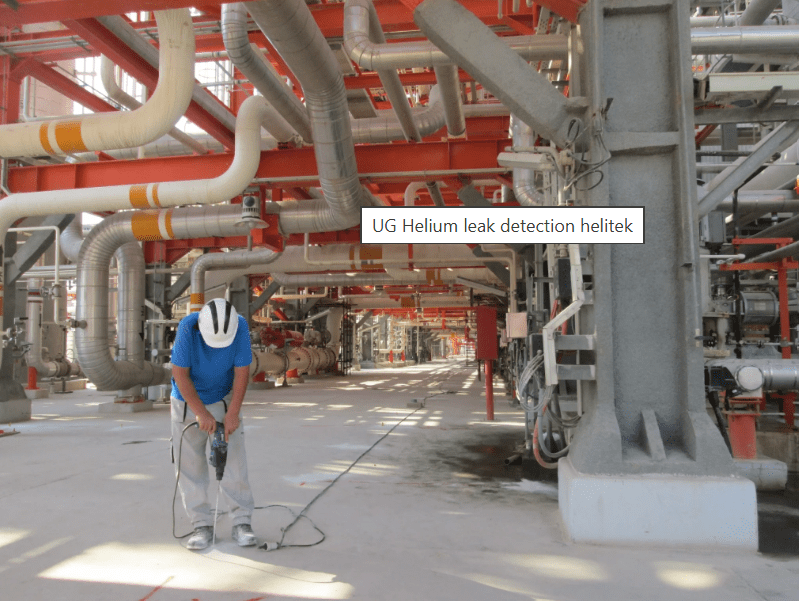
Underground Pipe Leak Detection
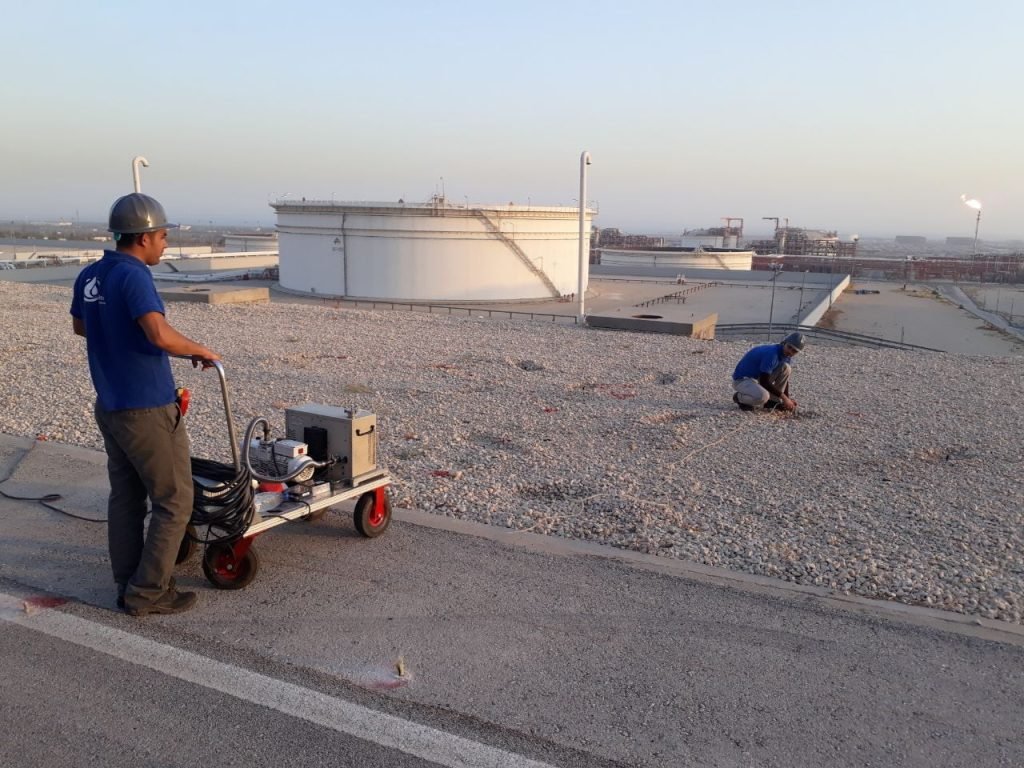
Locating leaks in buried pipelines without extensive excavation. Helium is injected into the line and sensitive surface detectors identify its presence as it escapes through leak points and permeates through the soil. This approach offers:
- Rapid leak location under normal operating pressures
- No requirement to hydrotest or over-pressurize the line
- Elimination of false positives common with alternative tracer methods
On-Stream Leak Detection
For operating facilities where shutdown is not an option, Tanqeb provides online leak detection services that identify leaks while equipment remains fully in service — preserving production continuity while addressing integrity concerns.
Testing Methods
We select the most appropriate method based on component geometry, accessibility, and required sensitivity:
Method | Description | Typical Application |
Vacuum Method | Component evacuated; helium sprayed externally; internal detector identifies ingress | Vessels, chambers, vacuum systems |
Sniffer Method | Component pressurized with helium; probe scans exterior for escaping gas | Piping, valves, field-fabricated joints |
Accumulation Method | Component enclosed in hood; accumulated helium measured over time | Ultra-high sensitivity requirements |
Bombing Method | Component immersed in helium pressure, then tested under vacuum | Sealed components, electronic enclosures |
Precision Instrumentation
Our testing utilizes advanced helium mass spectrometers featuring:
- Magnetic deflection or quadrupole mass spectrometry technology
- Detection sensitivity down to 5 × 10⁻¹³ Pa·m³/s
- Real-time leak rate display and continuous data logging
- Automated calibration and self-diagnostic functions
Our Process
Phase | Description |
Consultation & Planning | Engineers review equipment, operating conditions, and sensitivity requirements to define test protocol, acceptance thresholds, and inspection sequences |
On-Site Mobilization | Calibrated instrumentation and experienced technicians deployed to your facility, integrated with your schedule |
Testing Execution | Selected method applied with continuous monitoring and real-time results across all defined leak points |
Leak Quantification & Location | Detected leaks are precisely quantified and located, enabling targeted repairs without unnecessary disassembly |
Documentation | Detailed test report covering methodology, leak rates, locations, pass/fail determinations, and traceable audit data |
Post-Repair Verification | Retesting following repairs to confirm leakage elimination and full restoration of system integrity |
Industries We Serve
Industry | Typical Applications |
Oil & Gas | Pressure vessels, storage tanks, heat exchangers, pipeline flanges, LNG facilities |
Refining & Petrochemical | Reactors, columns, piping systems, valve seats, compressor seals |
Power Generation | Steam turbines, condensers, vacuum systems, fuel handling equipment |
Aerospace | Fuel systems, hydraulic components, vacuum chambers, cryogenic tanks |
Semiconductor | Process chambers, gas delivery systems, vacuum lines |
Nuclear | Containment systems, fuel handling equipment, cooling circuits |
The Tanqeb Commitment
Every helium leak detection project is executed by trained technicians using calibrated, traceable instrumentation — with full documentation provided for regulatory, insurance, and operational records. From initial consultation to post-repair verification, Tanqeb manages the entire integrity testing process.
When a leak cannot be tolerated, Tanqeb finds it.
